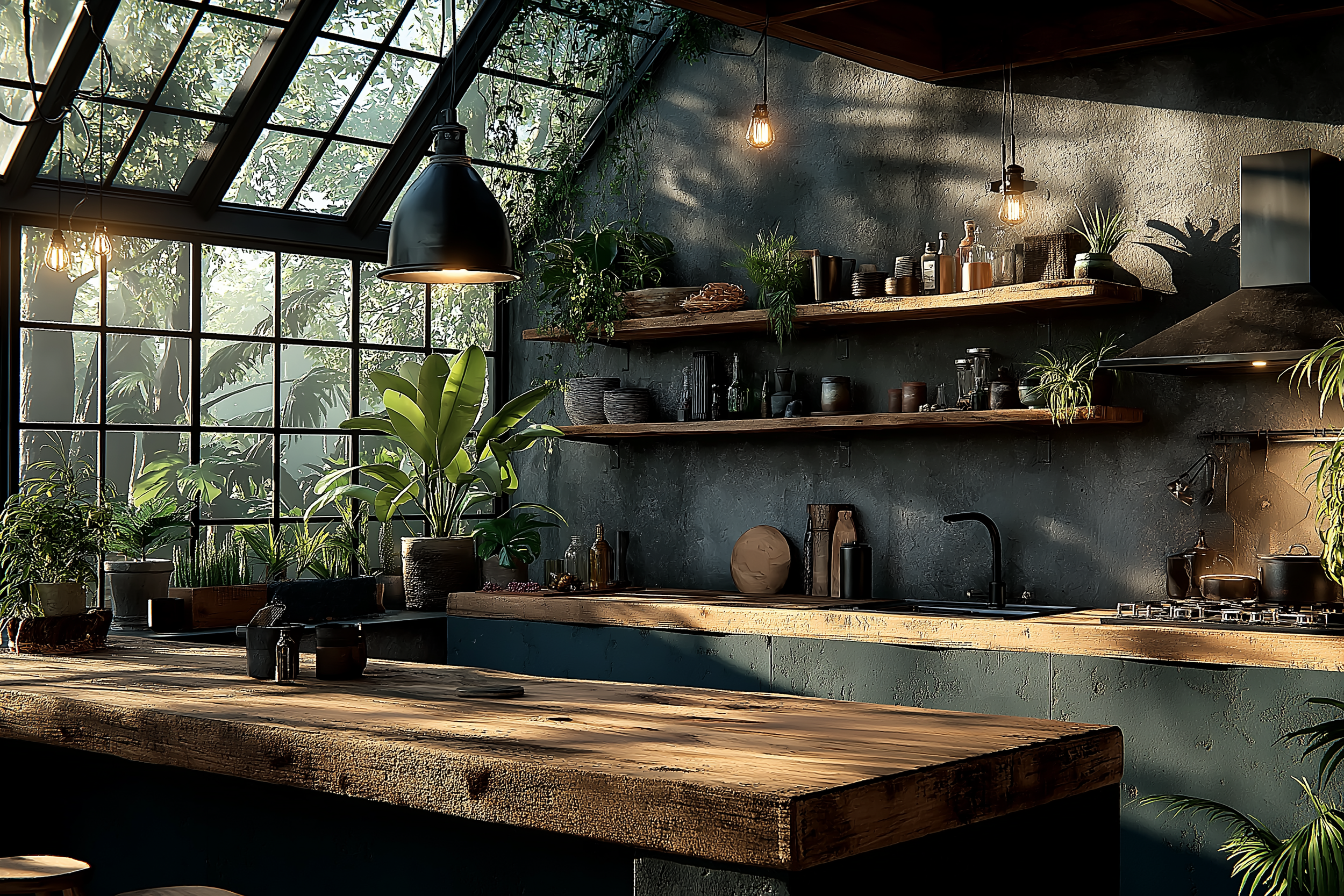
AI Spatial Design: Solving Realism, Consistency, and Scalability in Environment Creation
AI Spatial Design: Solving Realism, Consistency, and Scalability in Environment Creation
Problem:
AI-generated environments often fall short of professional use because they lack realism, drift stylistically between iterations, and can’t be scaled into repeatable frameworks for design or campaign needs.
Action:
Directed AI to generate interior environments by specifying architectural styles, layouts, materials, and lighting.
Applied rendering cues (ray tracing, depth of field, Unreal Engine 5) to push realism and simulate professional-grade rendering.
Iterated prompts to maintain style cohesion across variations, ensuring outputs looked like a unified set rather than random images.
Combined AI generation with traditional workflows to refine textures, depth, and composition for production-ready polish.
Result:
Produced immersive, realistic interiors that translated directly into storyboards, campaign pitch decks, and client-facing presentations.
Achieved style consistency across multiple variations, solving a core barrier for brands considering AI workflows.
Built a scalable process that makes environment creation faster, cheaper, and more reliable than traditional 3D rendering or photography.